MEASURE & FILL
4x8 raised bed: soil & bag counts
At 12 inches deep, a 4x8-foot inside footprint needs 32 cubic feet: 16 two-cubic-foot bags. Compare fill depths and bag sizes.
Read the note →THE RAISED BED WORKBENCH
Calculate soil volume, whole bags and bulk delivery costs from your bed’s inside dimensions.
Measure inside the walls. Fill depth is only the soil you want to add, including a top-up.
Optional extra soil for your own allowance. 0% uses the measured volume; this is not a predicted settling rate.
Use prices for the same soil mix. Empty prices leave costs unknown. Currency changes the label, not the prices.
A 0.5 increment orders in half-yard or half-metre steps. Use your supplier’s actual limits. Costs exclude taxes and bag delivery.
Measurements and quotes supplied by you.
1. Kitchen garden: 8 × 4 ft, 12 in fill, quantity 1.
YOUR SOIL PLAN
32 cu ft measured + 0% allowance
TWO WAYS TO BUY
2 cu ft each · 0 L above target
240.7 L above target · $0.00 delivery
USD. Orders are rounded up. Compare equivalent soil products; price does not measure soil quality.
Bag quote: not supplied each. Bulk quote: not supplied per cu yd. Order increment 0.5; minimum 0. Tax and bag delivery excluded.
Use Back to soil & cost in the spacing planner to restore your soil inputs in this tab. Your saved plan stays separate.
Rectangle: inside length × inside width × added soil depth. Round: π × radius² × depth. Multiply by the number of identical beds, then add all entries.
1 cubic foot = 28.316846592 litres. 1 cubic yard = 27 cubic feet. Bag count is rounded up after your allowance. Bulk orders are rounded up to the supplier’s increment after its minimum.
This calculates volume, not a soil recipe, weight or yield. See the worked cost example →
A FEW NOTES BEFORE YOU GROW
BEFORE YOU BUY
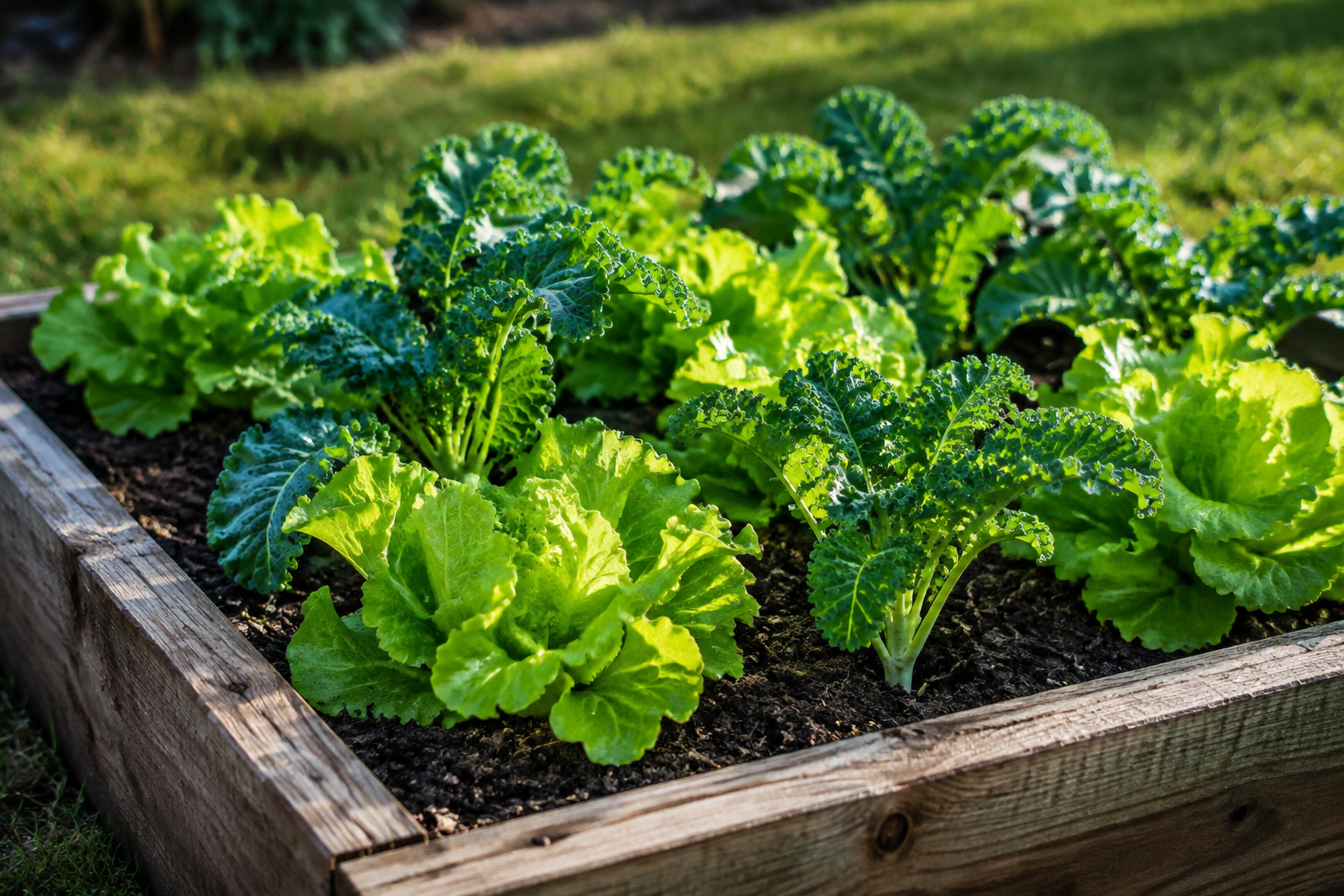
Ground-connected bed or elevated planter? Know what you’re filling before you choose the mix.
Read the garden noteMEASURE & FILL
At 12 inches deep, a 4x8-foot inside footprint needs 32 cubic feet: 16 two-cubic-foot bags. Compare fill depths and bag sizes.
Read the note →BUY & COMPARE
Compare bagged and bulk soil costs with delivery fees, minimum orders and leftovers. A worked example shows when the cheaper unit price costs more.
Read the note →SPACE & PLANT
Calculate planting positions from bed length, width, plant spacing, row spacing and edge margins. See the formula and two checked 4x8-bed layouts.
Read the note →MEASURE & FILL
Use inside dimensions and the soil depth you actually need. A worked example shows how to combine different beds into one clear order.
Read the note →SPACE & PLANT
A spacing calculation works best after you reserve the parts of a bed used for access, supports or a different crop. Plan each rectangular zone separately.
Read the note →PLAN & BUY
A complete planning workflow for turning bed measurements and supplier limits into a soil order you can explain, compare and revise.
Read the note →PLAN & BUY
Turn a supplier’s price, minimum order and delivery terms into a number you can compare with a bagged-soil order.
Read the note →MEASURE & FILL
Measure the missing layer, state an average when the surface is uneven, and buy only the material needed for the top-up.
Read the note →SOIL & COMPOST
Choose a suitable soil or growing-media test before buying more compost, keep samples identifiable, and turn the report into a clear amendment decision.
Read the note →WATER & MEASURE
Convert rainfall and irrigation depth into gallons or liters, measure sprinkler output, and check what a hose or drip timer actually delivers.
Read the note →SEEDS & PLANTING
Check leftover vegetable seeds with a small home test, calculate the observed sprouting percentage, and use the result without mistaking it for guaranteed garden emergence.
Read the note →PREPARE & PLANT
Prepare vegetable seedlings for outdoor sun and wind with gradual exposure, a simple observation log, and crop-specific weather checks before transplanting.
Read the note →PLAN THE BED
Choose raised bed depth by checking the base, usable rooting space and working height. Compare a bed on garden soil with a planter on a hard surface.
Read the note →PLAN THE BED
Record direct-sun intervals at candidate raised-bed locations, compare a worked example and check what one day’s observations cannot establish.
Read the note →PLAN & GROW
Keep a crop-family history, check what a two-bed swap changes, and compare two-year and four-year return intervals without treating a calendar as a disease guarantee.
Read the note →